
 Welcome to EnviroDIY, a community for do-it-yourself environmental science and monitoring. EnviroDIY is part of WikiWatershed, an initiative of Stroud Water Research Center designed to help people advance knowledge and stewardship of fresh water.
 New to EnviroDIY? Start here
Showcase
Highlighting projects we’re working on and gadgets we’ve built.
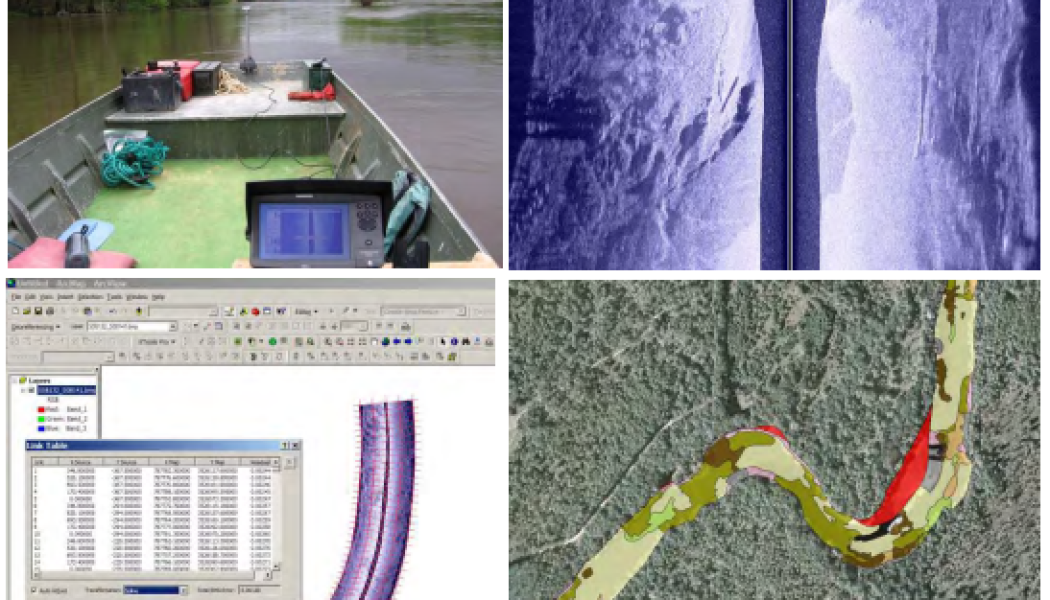

Side scan sonar: Towards a low cost benthic mapping tool
I originally learned of using side scan sonar/side imaging/fish sonar from a kayak fisherman tinkering around with a Side Scan Sonar/fish sonar device. I found more academic literature as I dived deeper: Assessment of Deadhead Logs and large Woody Debris using Side Scan Sonar and Field Surveys A Novel Approach to Surveying Sturgeon Using Side-Scan Sonar and Occupancy Modeling in Marine and Coastal...[Read More]
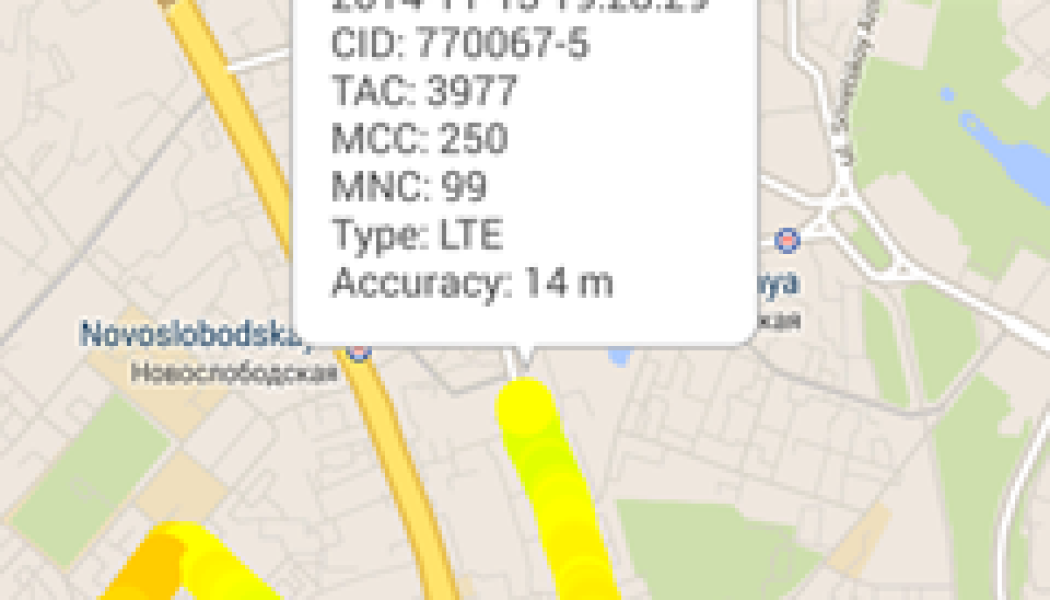

Wild wireless world ~ 2G or 3G
Wireless access comes in many forms – the cellular access is quite extraordinary in how useful it’s been – untethered access. There are hidden undercurrents for remote sensing M2M (machine-2-machine) – cellular technology shoals that can beach the unwary. I got beached – so I’m sharing it. Whether or not it’s on Sparkfun or publiclaboratories.org low cost cellular modems are being discussed and p...[Read More]
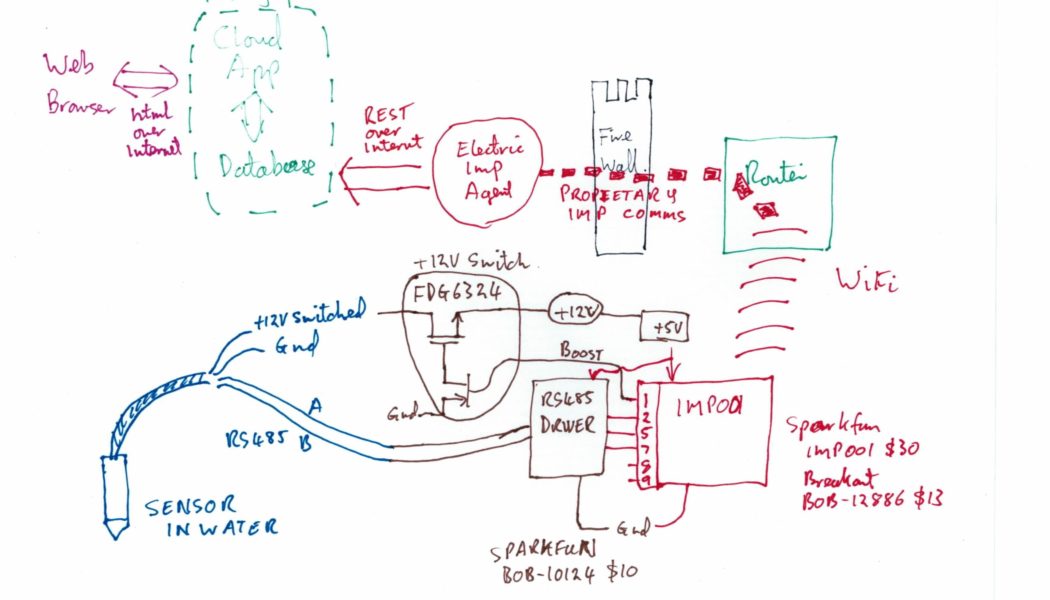

IMP calling sensor
A fun project was using the Electric IMP001 to communicate with an RS485 pressure transducer. The readings are delivered to the cloud and use the nice (and evolving) services of thingspeak.net. The starting point was to test the stability of an RS485 pressure sensor – and check out the then new IMP001 – two projects in one. Stability testing a pressure transducer is putting it into a bottle of wat...[Read More]
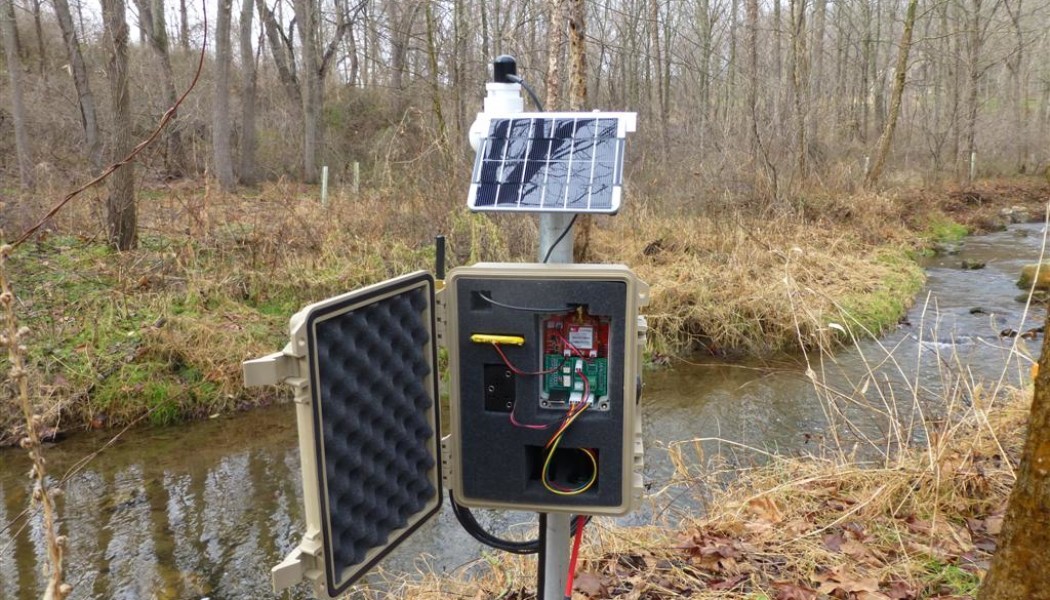

Next generation rugged datalogger
Our Arduino datalogger designs have gone through a few improvements since our original models four years ago. This past year we refined the design even more and have come up with our most rugged and reliable system yet. The datalogger is still based on the Seeeduino Stalker board, which has solar battery charging circuitry, memory card slot, real time clock, and a socket for an XBee radio or ce...[Read More]
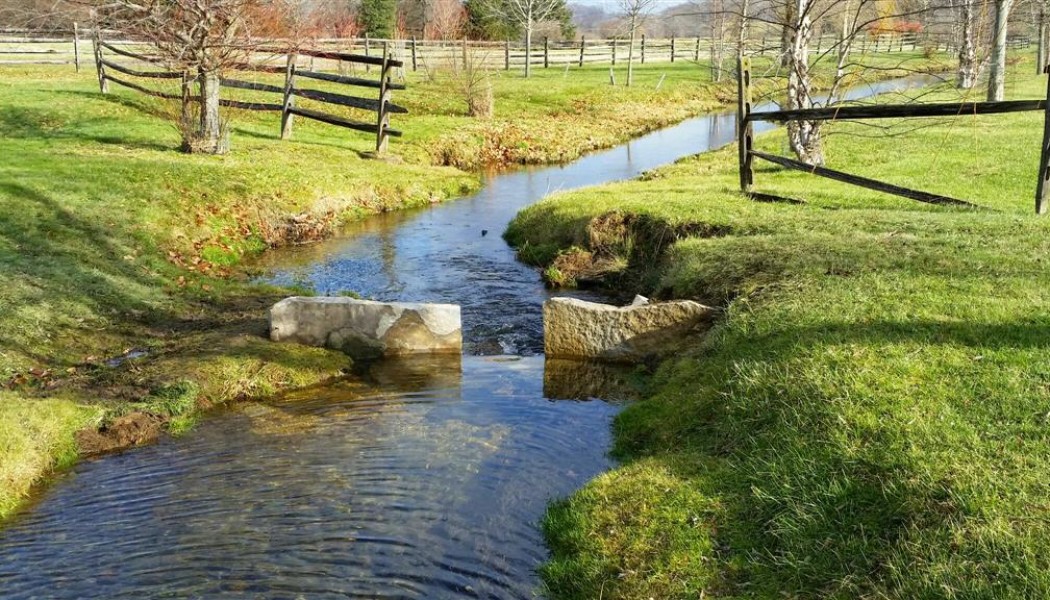

Stone Control Structure – Flume
What is a good way to gage a stream without using a weir or an engineered flume? How about this stone control structure / flume? Having a stable control is invaluable for developing a good stream flow rating curve. A rating curve relates the depth of the stream to the flow at a particular point. By a stable control I am referring to a cross-section of stream that will not change over time due ...[Read More]
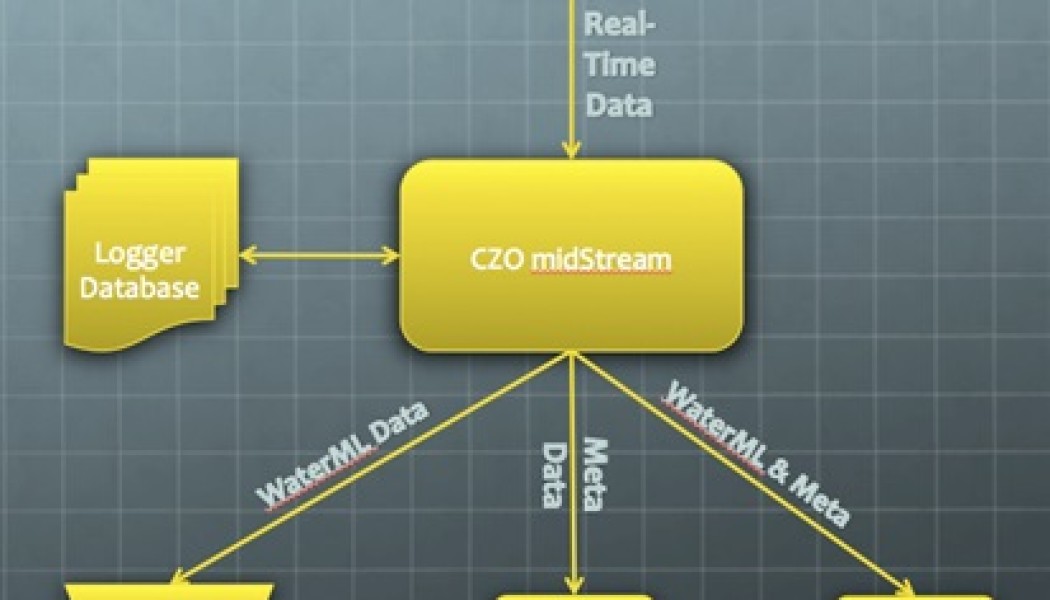

midStream – Making real time data publicly available
At the Stroud Water Research Center, one of our first priorities for the Arduino based sensors that Shannon Hicks has been developing has been to make the raw data publicly available online in a readily sharable format. For now, we’re formatting our data as WaterML 1.0 and sharing it as a WaterOneFlow webservice. WaterML and the webservice specifications were originally developed by the Co...[Read More]
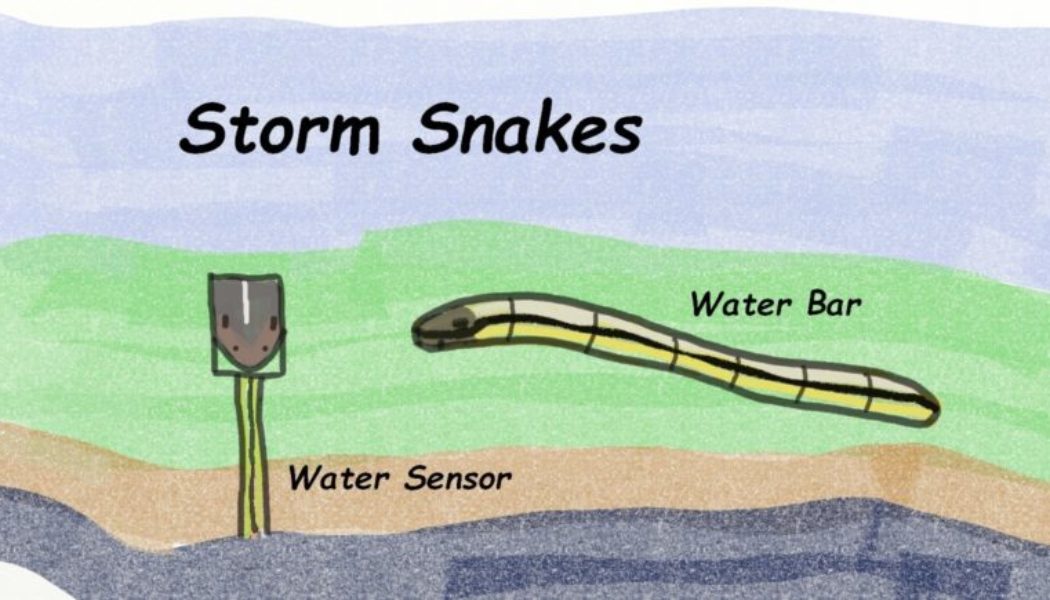

#StormSnakes for Stormwater Run-off
Greetings, I’m Leslie Birch and I’m an anomaly — a tech artist with a strong interest in water and other environmental causes. Currently I’m at the Schuylkill Center for Environmental Education as a LandLab artist, tasked with creating an artistic intervention for stormwater run-off at their site. The tech side of me wanted to do something with monitoring, while the artist ...[Read More]
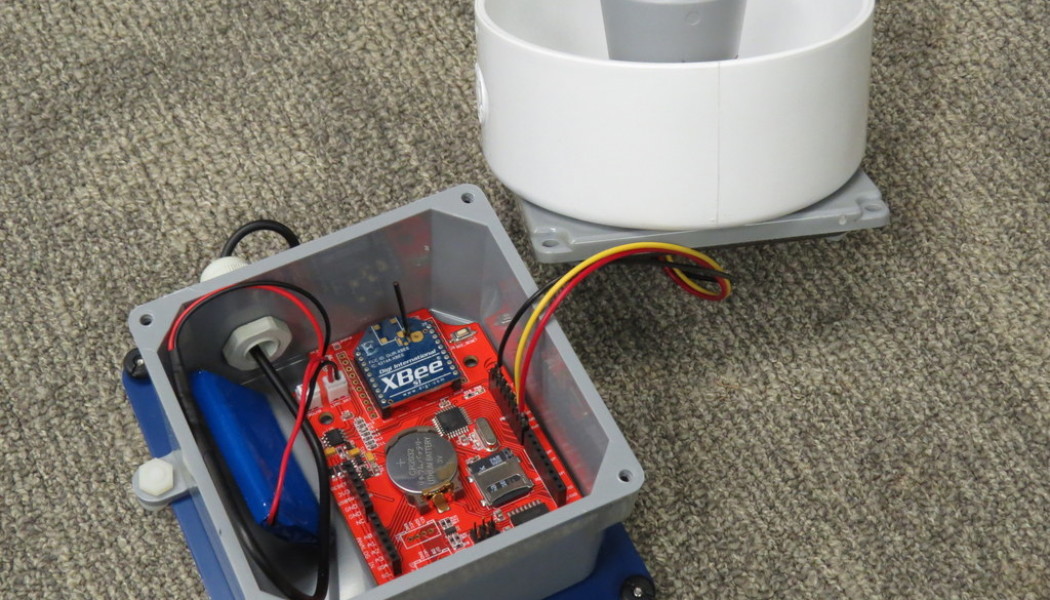

Ultrasonic water depth sensor
We have been using submersible pressure transducers for water level measurements for many years, but some of our installations are in areas with very shallow water that might freeze during the winter. Most pressure transducers will be damaged if they are in water that freezes, so we’ve been experimenting with an ultrasonic rangefinder that will allow us to measure the water level from above...[Read More]

SDI-12 sensor display
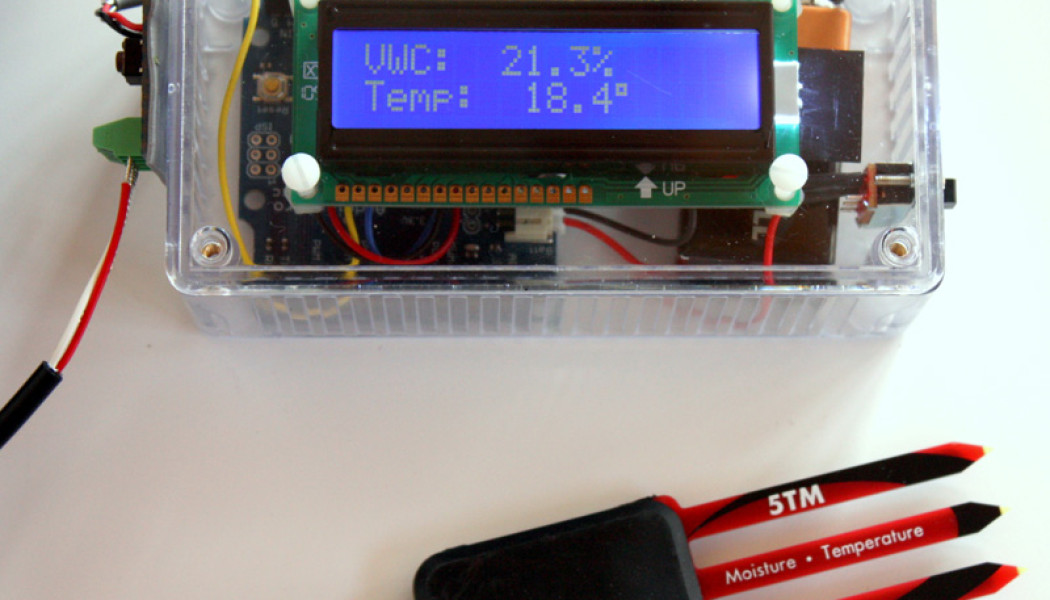
Whenever we install a sensor in the field, it’s always helpful to make sure it is reading properly before connecting it to the datalogger. Having a display to show the live data from a sensor is also helpful when doing calibration and testing of the sensor in the lab. We use a variety of sensors from Decagon Devices. Their high-quality, research grade sensors output the data in two format...[Read More]

Undervoltage protection switch
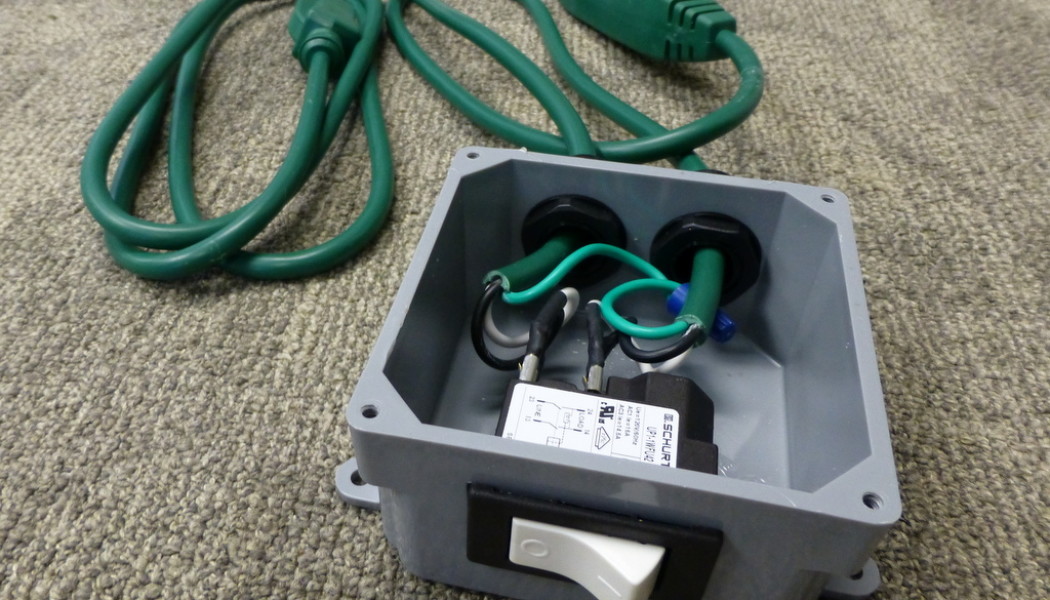
I recently built a device that is very useful but is hard to find commercially, and even information was scarce about how to build one myself, so I’m posting the details here in hopes that it helps anyone who might be looking for a similar device. It’s called an undervoltage protection switch. In Europe, it’s commonly called a no-volt release switch. What does it do? It is bas...[Read More]

Portable soil respirometer system
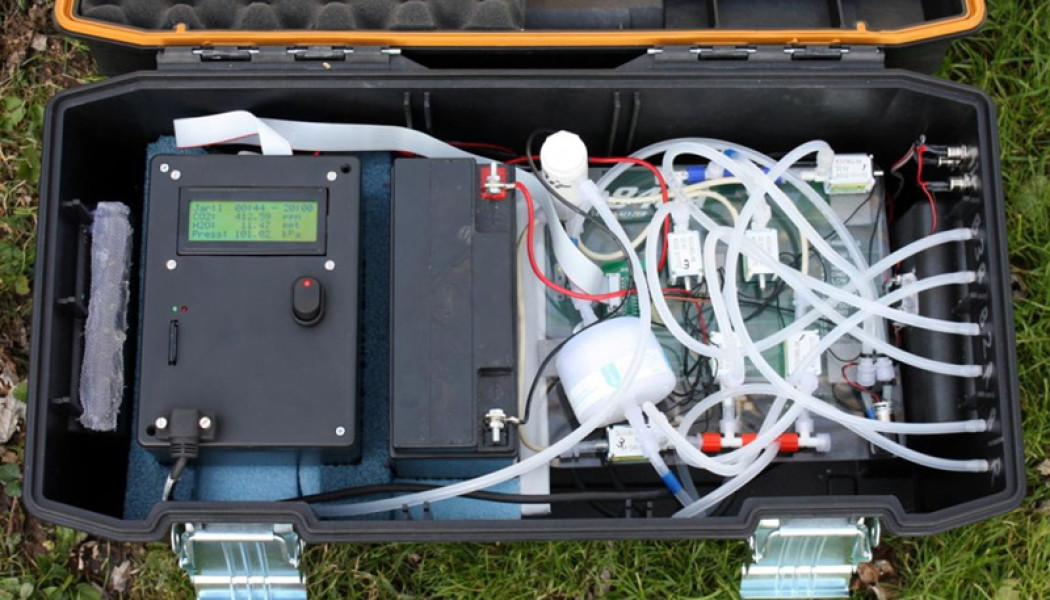
After having great success with the laboratory multi-chamber soil respirometer system, we built a portable version that could be deployed in the field for in-situ measurements. It still uses the same Licor LI-840 gas analyzer system and a smaller Arduino controller, based on the Sparkfun ArduinoPro board since it has better power efficiencies than the Uno, which is important for battery-powered o...[Read More]

Multi-chamber soil respirometer
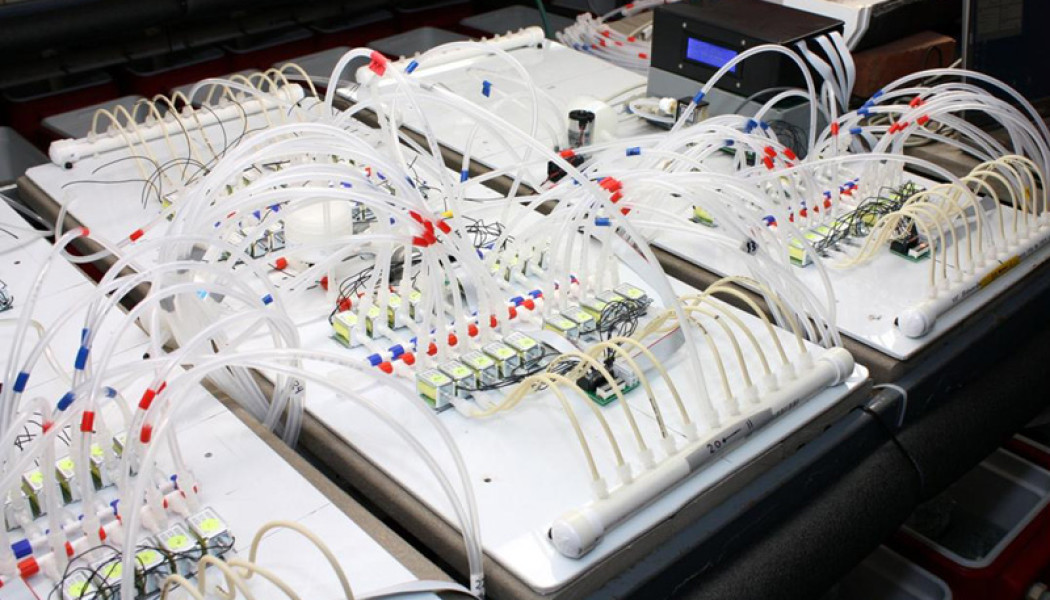
Commercial systems that measure carbon dioxide for soil respiration experiments can be very expensive, but we built one for a fraction of the cost. The controller is based on an Arduino Uno, with a datalogger shield for storing the collected data, and a Macetech Centipede Shield. The measurement system is a Licor LI-840 CO2 analyzer which outputs its data every second using XML strings via an ...[Read More]
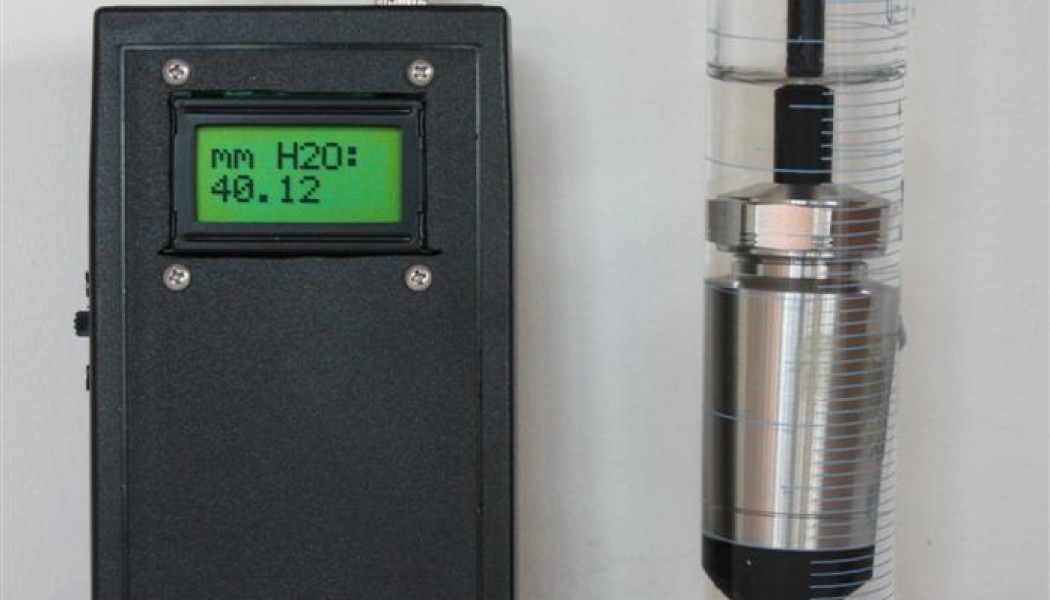

Water depth sensor display
We have several dozen pressure transducers deployed in wells or in streams to measure water level, and sometimes it’s helpful to read the water level directly from the sensor. This model of sensor has an analog output, meaning that the circuitry supplies 5 volts DC to one wire, and the voltage on the return signal wire is proportional to the depth of the water. So by measuring the analog r...[Read More]
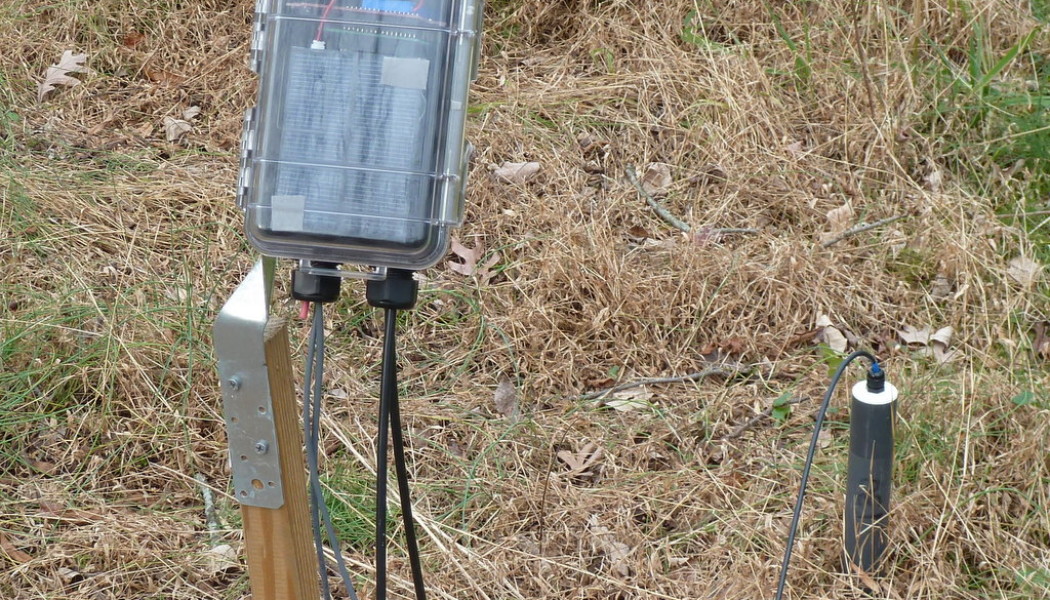

Clear enclosure dataloggers
We have had a number of Arduino dataloggers deployed for a couple years now. The first ones were based on the Arduino Pro boards and a datalogger shield from Adafruit. Our newest version is based on the Seeeduino Stalker board. It’s handy because it has a built-in real time clock (RTC), solar charging circuitry, a microSD memory card slot, and an XBee radio socket. On top of the Stalker ...[Read More]
- 1
- 2