-

Sara Damiano replied to the topic Wifi Bee AT Firmware and Baud Rates in the forum Mayfly Data Logger 3 months, 1 week ago
If that doesn’t compile for you, update your TinyGSM library or just delete lines 87-92 to remove the forceModemBaud command, which needs the version of TinyGSM within the last few weeks.
It it’s working for you, comment out the section that resets the modem to defaults (lines 107-126) and run it one more time to get the modem to 9600. It should…[Read more]
-
Sara Damiano replied to the topic Wifi Bee AT Firmware and Baud Rates in the forum Mayfly Data Logger 3 months, 1 week ago
Use 3.3V to power the WiFi bee and make sure that you’re adapter uses 3.3V logic. The 0.5A most USB ports can provide should be enough for the WiFi bee without browning out. You are seeing the lights on the bee go on, right?
This script worked for me to force the baud rate on three different WiFi Bee’s. The script forces the baud rate and th…[Read more]
-
GChafe replied to the topic Wifi Bee AT Firmware and Baud Rates in the forum Mayfly Data Logger 3 months, 1 week ago
I’ve tried some more witht hat code and no luck. So I decided to confrim the AT firmware and I’m not sure if I did or not. Using a USB to TTL I connected directly to the Wifif Bee and used Putty. I did see some text and a brownout warning on the screen. So I used the TTL for RX and TX and I connected a 3.7V Lipo battery to VCC and GND and also the…[Read more]
-

Regina Fletcher commented on the post, Floodzilla Gauge Network: Community-Designed Flood Monitoring 3 months, 1 week ago
@ensign Thanks for the great question. So prior to 2018, SVPA was building its own sensors. After 2018 the program began using Senix Brand ultrasonic sensors on a private MTS system, reading to configured […]
-
BAE became a registered member 3 months, 1 week ago
-
GChafe replied to the topic Wifi Bee AT Firmware and Baud Rates in the forum Mayfly Data Logger 3 months, 1 week ago
Thank you very much Sara. I have tried something like that before (but likely not quite rightly coded). This failed to switch baud rates too unfortunately. I have tried this on 3 out of 4 wifi bees that I have (but just one with you sketch so far) and no luck, that’s how I ended up asking about the firmware.
Did your sketch in a hurry, so will…[Read more] -
Sara Damiano replied to the topic Wifi Bee AT Firmware and Baud Rates in the forum Mayfly Data Logger 3 months, 1 week ago
Once you’ve successfully changed the WiFi bee’s baud rate, it will stay at the slower baud. You should only have to reset the baud rate if you factory reset the bee or update it’s firmware – neither of which you can do by accident.
-
Sara Damiano replied to the topic Wifi Bee AT Firmware and Baud Rates in the forum Mayfly Data Logger 3 months, 1 week ago
The WiFi bee should have the AT firmware on it. The problem probably is the baud rate. The default baud rate for the ESP32 (the brain on the WiFi bee) is 115200. That’s too fast for stable communication with the 8MHz Mayfly. The Mayfly can usually *talk* fairly accurately at 115200, but it can’t listen that fast. The auto-baud function depends o…[Read more]
-
Andykibz became a registered member 3 months, 1 week ago
-
GChafe started the topic Wifi Bee AT Firmware and Baud Rates in the forum Mayfly Data Logger 3 months, 1 week ago
Hi, I have a Mayfly 1.1 and a ESP32 WiFi Bee purchased from EnviroDIY recently, also a Hydros21 CTD. Having lots of trouble getting it to work. Using the EnvirDIY_Monitoring_Kit sketch from https://github.com/EnviroDIY/ModularSensors/commit/f149a372ae47d95d474971abc25dd378bd332ecf. Though I have also tried other ones (possibly older) from…[Read more]
-
GChafe became a registered member 3 months, 1 week ago
-

Scott Ensign commented on the post, Floodzilla Gauge Network: Community-Designed Flood Monitoring 3 months, 2 weeks ago
@rgmfletcher Thanks for sharing news about this incredible monitoring program! I found more information on your webpage (https://svpa.us/floodzilla-gauge-network/), but I didn’t see anything about the technology […]
-
Steve Pacenka became a registered member 3 months, 2 weeks ago
-
Regina Fletcher wrote a new post 3 months, 2 weeks ago
Floodzilla Gauge Network: Community-Designed Flood Monitoring
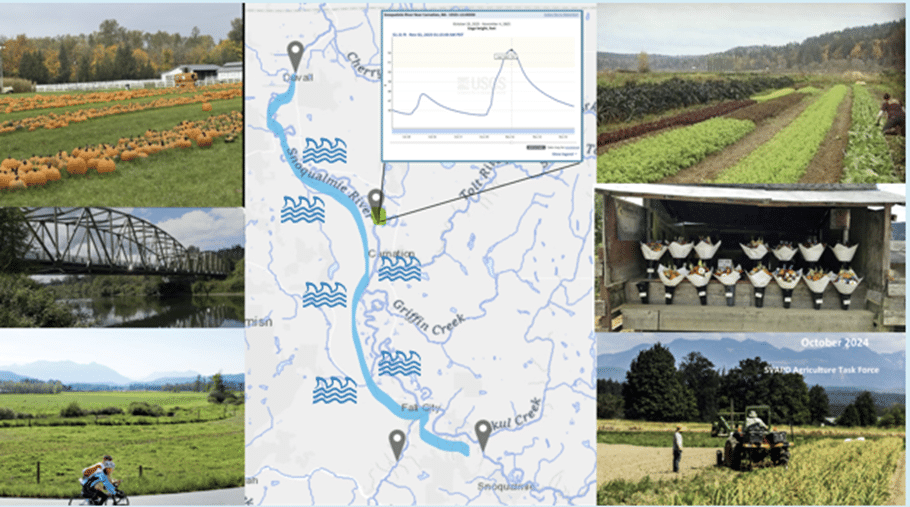 Flooding is a natural part of life in the lower Snoqualmie Valley area of Western Washington. Historically, when seasonal rains would begin, many […]
 -
Regina Fletcher started the topic New Sensor Supplier for Floodzilla Flood Monitoring Network in the forum Environmental Sensors 3 months, 2 weeks ago
Hi EnviroDIY community,
My name is Regina Fletcher, and I help maintain a community-designed, LoRaWAN-based Flood Monitoring Network, called Floodzilla. I am in the process of diversifying our flood monitoring devices to help us be more flexible and resilient. I have been eyeing a company called Vega and their VegaPuls C21 radar sensor, which I…[Read more]
-
Linganore Creek, Frederick County Maryland became a registered member 3 months, 3 weeks ago
-

Shannon Hicks wrote a new post 3 months, 3 weeks ago
Mayfly Data Logger gets OSHWA Certification
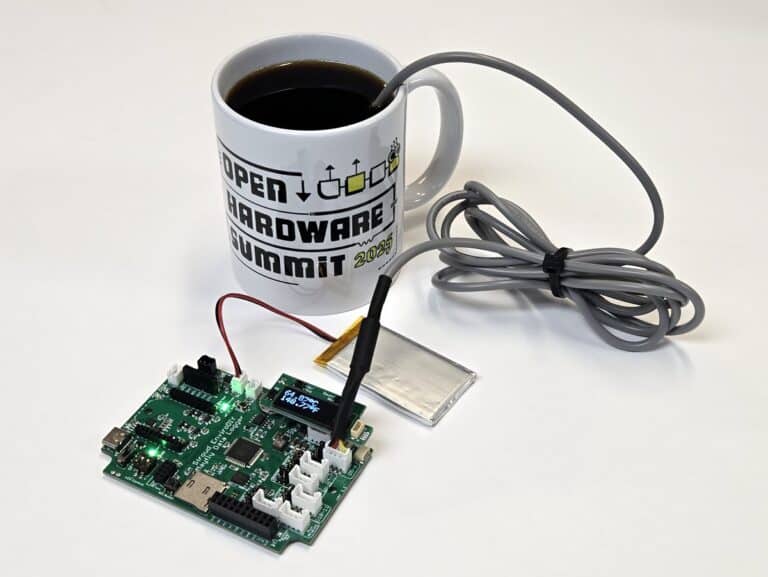 The EnviroDIY Mayfly Data Logger was recently certified by the Open Source Hardware Association (OSHWA), verifying that the project meets all the […]
 -
Regina Fletcher became a registered member 3 months, 3 weeks ago
-
Scott Ensign commented on the post, Reliable, Low-Cost Methods for Sensor Deployment in Estuaries 4 months ago
In addition to the sensor data published from this project (https://doi.org/10.6073/pasta/54fecf9652c2e4d93e92d64388e6c3eb), the results of the particle source tracking are published here:
-
okamran replied to the topic No address detected for any sensor in the forum Mayfly Data Logger 4 months, 1 week ago
Hey! Sorry for the late response but I tried running a few of the different ModularSensor versions, and it seemed that v0.36.0 works for DRWI_7080LTE!
I initially started with v0.37.0 and v0.34.0, but those had issues with the libraries working together, naming issues, etc.
v0.35.0 was able to compile but recorded -9999 values for both the…[Read more]
- Load More
 Welcome to EnviroDIY, a community for do-it-yourself environmental science and monitoring. EnviroDIY is part of WikiWatershed, an initiative of Stroud Water Research Center designed to help people advance knowledge and stewardship of fresh water.
 New to EnviroDIY? Start here
Activity