
 Welcome to EnviroDIY, a community for do-it-yourself environmental science and monitoring. EnviroDIY is part of
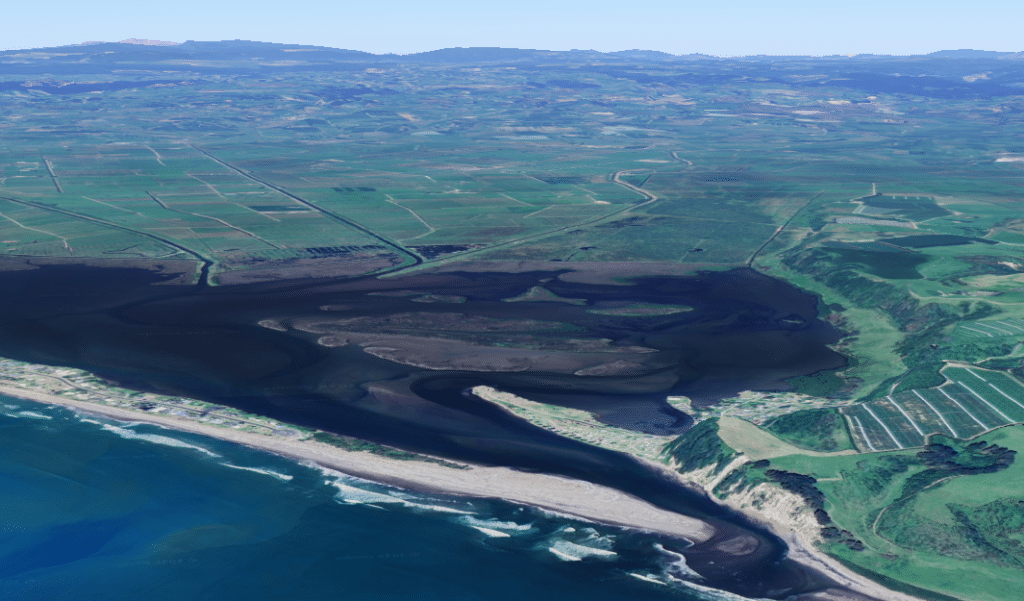
Researchers in New Zealand discovered that high-frequency monitoring of rivers yielded a more accurate accounting of nitrogen, phosphorus, and sediment loads than monthly grab samples allowed for. While high-frequency monitoring was more expensive, “the added investment is minor when weighed against the risks of poorly informed land management actions or generic policies based on limited contaminant data.” The research was published in Scientific Reports.
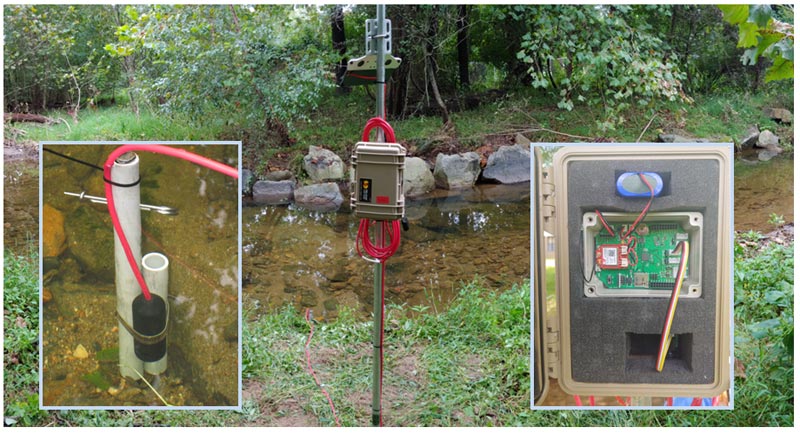
James Dare and colleagues also tested whether a lower-cost, do-it-yourself monitoring approach was a feasible alternative to more expensive commercially-manufactured equipment. They deployed EnviroDIY Mayfly Data Loggers to record data from Meter Group conductivity, temperature, and depth sensors, as well as a Yosemitech nephelometer.
“The main advantage of this method remains its cost: equipment costs are up to ten times lower than OTS [off-the-shelf] systems, allowing wider spatial coverage across a catchment.” The authors report a total cost of $2,723 NZD per EnviroDIY Monitoring Station (including sensors), and an annual labor cost of $1,200 NZD for routine maintenance of 10 stations.
The study also explored the use of artificial neural networks for predicting continuous nitrogen, phosphorus, and sediment concentration based on the surrogate parameters collected from sensors. This approach enabled inclusion of nitrogen, phosphorus, and sediment concentration changes during storm events, conditions not captured by routine monthly sampling. The higher temporal resolution data not only revealed higher nitrogen, phosphorus, and sediment export, it also revealed important differences in hydrologic behavior between rivers and their catchments.
Citation: Dare J.E., Özkundakci D. & McDowell R.W. A do-it-yourself water quality sensor network to elucidate contaminant signatures and improve land management advice. Sci Rep (2026). https://doi.org/10.1038/s41598-026-43915-9

James_NZ
I came here to share the news but Scott beat me to it!
I really want to thank everyone for all the help and support provided along the way! This really is a fantastic community.
I am now with AquaWatch Solutions (https://www.aquawatchsolutions.com/), focusing on continuous water quality monitoring in New Zealand and abroad. Feel free to contact me on jd227@students.waikato.ac.nz if you have any questions about the project.