CloudFlare provides web performance and security solutions, enhancing site speed and protecting against threats.
Service URL: developers.cloudflare.com (opens in a new window)
cf_use_ob
The cf_use_ob cookie informs Cloudflare to fetch the requested resource from the Always Online cache on the designated port. Applicable values are: 0, 80, and 443. The cf_ob_info and cf_use_ob cookies are persistent cookies that expire after 30 seconds.
session
__cfwaitingroom
The __cfwaitingroom cookie is only used to track visitors that access a waiting room enabled host and path combination for a zone. Visitors using a browser that does not accept cookies cannot visit the host and path combination while the waiting room is active.
session
cf_chl_rc_i
These cookies are for internal use which allows Cloudflare to identify production issues on clients.
session
cf_chl_rc_ni
These cookies are for internal use which allows Cloudflare to identify production issues on clients.
session
cf_chl_rc_m
These cookies are for internal use which allows Cloudflare to identify production issues on clients.
session
__cfruid
Used by the content network, Cloudflare, to identify trusted web traffic.
session
__cf_bm
Cloudflare's bot products identify and mitigate automated traffic to protect your site from bad bots. Cloudflare places the __cf_bm cookie on End User devices that access Customer sites that are protected by Bot Management or Bot Fight Mode. The __cf_bm cookie is necessary for the proper functioning of these bot solutions.
session
__cflb
When enabling session affinity with Cloudflare Load Balancer, Cloudflare sets a __cflb cookie with a unique value on the first response to the requesting client. Cloudflare routes future requests to the same origin, optimizing network resource usage. In the event of a failover, Cloudflare sets a new __cflb cookie to direct future requests to the failover pool.
session
_cfuvid
The _cfuvid cookie is only set when a site uses this option in a Rate Limiting Rule, and is only used to allow the Cloudflare WAF to distinguish individual users who share the same IP address.
session
cf_clearance
Whether a CAPTCHA or Javascript challenge has been solved.
session
__cfseq
Sequence rules uses cookies to track the order of requests a user has made and the time between requests and makes them available via Cloudflare Rules. This allows you to write rules that match valid or invalid sequences. The specific cookies used to validate sequences are called sequence cookies.
session
cf_ob_info
The cf_ob_info cookie provides information on: The HTTP Status Code returned by the origin web server. The Ray ID of the original failed request. The data center serving the traffic
session

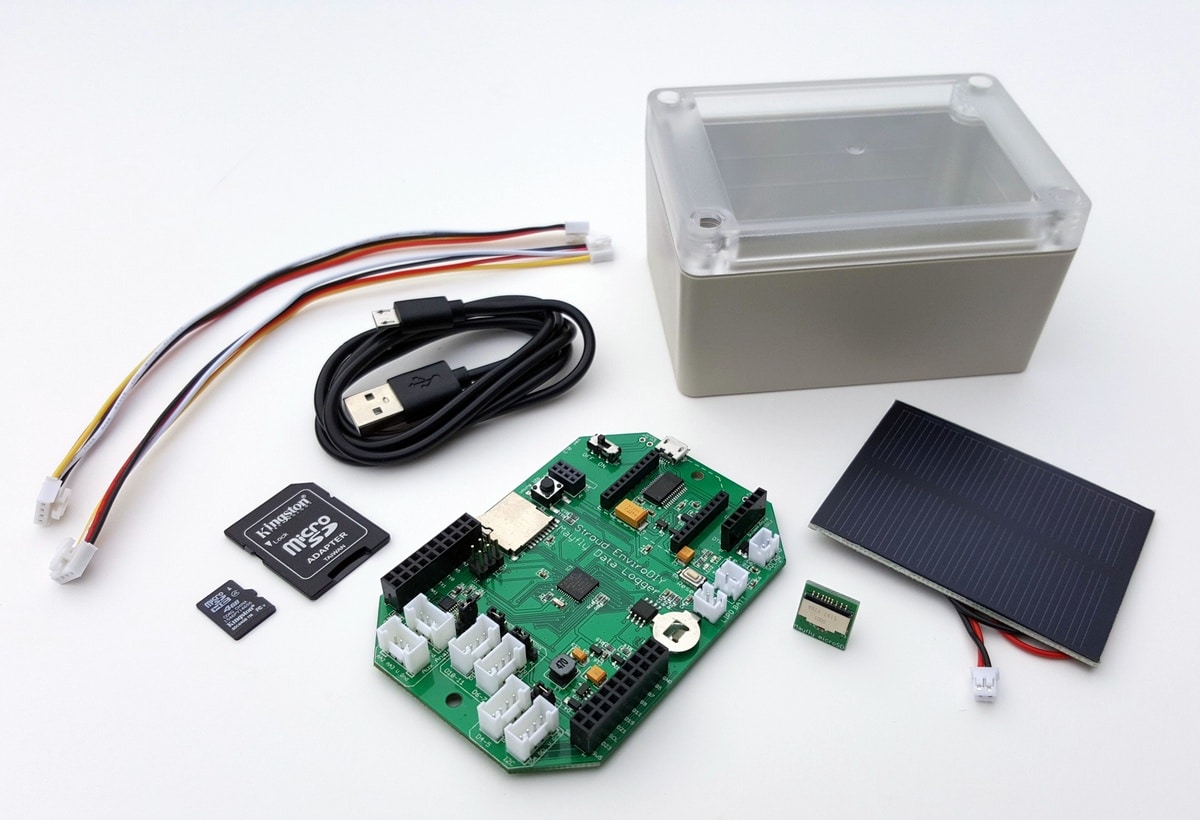 Update: We have closed our Amazon shop. See the EnviroDIY Shop for current availability. We are excited to announce that our Mayfly Data Logger boards […]
 Welcome to EnviroDIY, a community for do-it-yourself environmental science and monitoring. EnviroDIY is part of WikiWatershed, an initiative of Stroud Water Research Center designed to help people advance knowledge and stewardship of fresh water.
Great to see these are now available. Unfortunately i’m in the UK and amazon doesn’t appear willing to ship this item internationally. Is there any likelihood that you will be able to ship internationally in the near future?
These look really promising. I second Davids comment though. I would very much like to test the Mayfly but Amazon are not allowing shipping to the UK.
We are aware of the availability issue for customers outside North America and are looking into different options for international sales.
Great! Looking forward to getting my hands on a couple of these.
A basic question about power:
Ideally, we would like to use 12V ~7aH AGM lead acid batteries to power the Mayfly instead of the 3.7V LiPo. We are planning to use the Mayfly for a pretty power intensive sapflux installation that requires small heaters to be powered directly off of 12V batteries. If we could use the 12V battery to also power the Mayfly that would be ideal.
1. Is it possible to power the Mayfly with a non LiPo battery? What about a voltage >3.7? I know that the Uno can accept 7-12V, but I don’t see an obvious Vin port in the pictures of the Mayfly.
2. I assume that the LiPo battery charging capabilities that are built in to the Mayfly are not suited for a Lead Acid AGM charging, correct? Do you have any suggestions for a low cost charge controller? We have used sunsavers in the past, but I’d love to hear any other suggestions.
Thanks!
On the top of the board near the FTDI header there’s an unpopulated 2-pin header for an Aux 5v input. Most people won’t use it, but I put it there for the experienced users who want the flexibility of different power options. I’ve been powering several boards like that lately, I’ll try to write about it on the Hardware section of the support page soon. The input voltage should not exceed 6v or certain components on the Mayfly could be damaged. While we could have included a regulator to handle higher voltages, it would require dissipating lots of heat, so in the interest of keeping things simple, we opted to limit the input voltage to 5v.
An easy way to power the Mayfly with a 12v battery would be to use a 12v-to-5v stepdown converter with microUSB plug. There are many of them on Amazon for around $10-15. They are commonly used for connecting power in cars for dashcams and GPS units. Some of them also have an inline power switch and/or a fuse. I’ve been using one with a 12v, 18ah SLA battery and it works great.
The charging circuitry on the Mayfly is only suitable for a lipo battery. You’ll need a completely different solar charge controller if you’re trying to charge a large capacity 12v battery. I can write more about that topic in another blog post that’s specifically about solar panels.
Neat! I’m looking forward to trying this out! I believe it will help me to get around some limitations of the proprietary logger I’m using and allow me to make sensor installations that would not be economically viable otherwise.
Is there any more info on availability in Europe ? Nothing on Sodaq website and I’ve emailed them but no response.
International sales options are complicated so we don’t have a option yet ,and I don’t have an estimate on when we might be able to announce something.